
Digital transformation roadmap for mid-market companies: a 3-year blueprint
A digital transformation roadmap is a sequenced plan that fixes your data and core systems first, then automates the work around them, and only then adds analytics and AI on top. For a mid-market company, that order matters more than the tools. Skip the foundation and you end up automating broken processes and building dashboards on numbers nobody trusts.
Most transformation advice was written for enterprises with $50M IT budgets and a CIO org three layers deep. That’s not you. You have a handful of systems, a lean team wearing several hats, and no appetite for a two-year platform migration that stalls the business. So this is a three-year blueprint built for the constraints you actually operate under.
What digital transformation actually means for mid-market
Forget the buzzwords. For a mid-size company, transformation means one thing: the software running your operations stops slowing you down and starts giving you leverage. That’s it.
In practice it looks unglamorous. Your order data lives in one place instead of five spreadsheets. A new customer flows from your CRM into billing without someone rekeying it at 6pm. Your ops lead can answer “how many jobs shipped late last month” in thirty seconds instead of an afternoon. None of that requires reinventing your business. It requires plumbing that works.
The enterprise version of transformation is often about scale and standardization across dozens of business units. Yours is about removing friction. A good digital transformation strategy for mid-market keeps that distinction front and center, because the temptation to buy enterprise-grade platforms you’ll never fully use is real, and it’s expensive.
Signs your operations are holding growth back
You usually feel this before you can name it. A few concrete signs the current setup has become the ceiling:
Your team spends real hours copying data between systems, and everyone treats it as normal.
Two departments quote different numbers for the same metric because they pull from different sources.
Onboarding a new client or hiring a new ops person takes weeks longer than it should because the process lives in someone’s head.
You’ve said “we can’t do that until we upgrade the system” more than once this quarter.
A single spreadsheet has become load-bearing, and one person owns it, and everyone quietly worries about the day they leave.
If two or three of these sound familiar, the issue isn’t effort. Your people are working hard. The systems underneath them just can’t keep up, and no amount of hustle fixes an architecture problem.
The 3-year roadmap: a phased blueprint
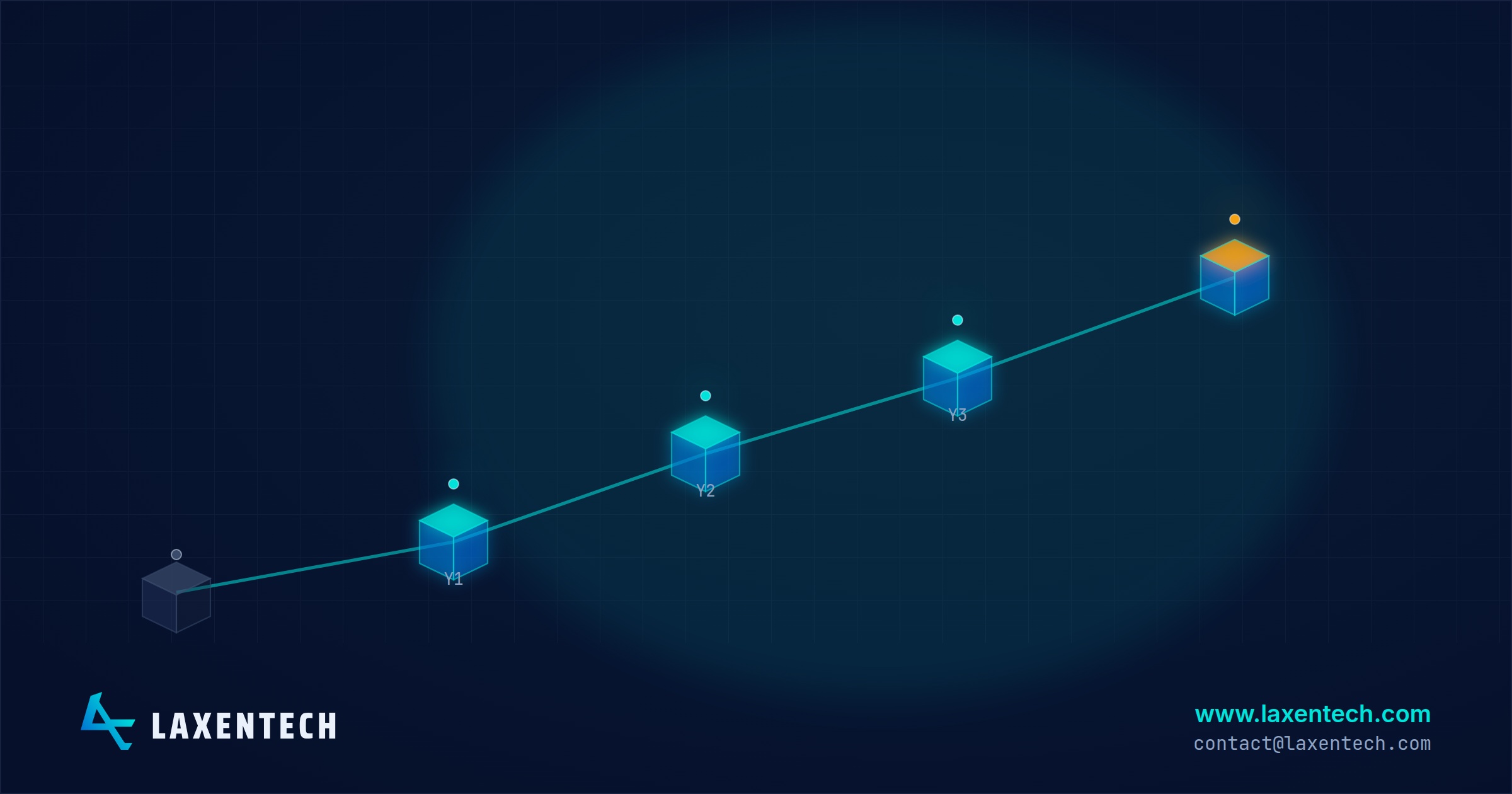
Three years sounds long. It isn’t, once you see how much has to happen in sequence. Each phase earns the right to the next one. You don’t automate until the data is clean, and you don’t lean on AI until you have integrated, trustworthy data flowing through the business.
Here’s the shape of it.
Year 1: stabilise data and core systems
Year one is boring on purpose. The goal is a single source of truth for the two or three things that matter most, usually customers, orders or jobs, and money.
That means auditing where data actually lives, deciding which system owns each record, cleaning up the mess, and either consolidating tools or connecting them properly. If you’re running an aging platform that everything else depends on, this is also when you plan its replacement. Rushing a core swap is one of the fastest ways to blow up a transformation, so if that’s on your list, read up on how to approach legacy system modernization before you commit to a date.
By the end of year one, nobody should be arguing about whose numbers are right. That single outcome unlocks everything after it.
Year 2: automate and integrate
Now that the data is trustworthy, you connect the systems that hold it and remove the manual handoffs. This is where the time savings become obvious to the whole team.
Integration is the heart of year two. When your CRM, your operations system, and your finance tools talk to each other, the rekeying disappears and the errors that came with it disappear too. If you’ve never scoped an integration project before, the practical trade-offs are worth understanding early, and this walkthrough of how software integration actually works covers the parts people underestimate. Automation sits on top: approval flows, notifications, document generation, the repetitive steps that eat your team’s day.
A caution here. Don’t automate a process you haven’t fixed. If a workflow is confused, automating it just produces confusion faster. Map it, simplify it, then wire it up.
Year 3: analytics and AI
Only in year three do analytics and AI make sense, because they depend entirely on the two phases before them. Clean data, connected systems, then intelligence.
Year three is where you get forecasting that’s actually reliable, dashboards leaders trust enough to act on, and targeted automation using AI where it earns its keep, things like classifying inbound requests, flagging anomalies, or pulling structured data out of documents. The mistake is starting here. AI on top of messy, disconnected data produces confident nonsense, and nothing erodes trust in a transformation faster than a flashy model that’s wrong.
Notice the roadmap can also be your technology roadmap in miniature: each year has a clear theme, a clear outcome, and a clear reason it comes when it does.
How to sequence projects by ROI and risk
Within each phase you’ll have more projects than you can run at once. Sequence them on two axes: how much value they return, and how much risk they carry.
The instinct is to chase the biggest prize first. Resist it. Early in a transformation, momentum and trust matter more than the size of any single win. So start with high-value, low-risk projects, the quick wins that prove the effort is paying off and buy you credibility with the team and the board.
Save the high-value, high-risk work, like replacing a core platform, for when you’ve built that trust and your foundation is solid. And be honest about the low-value, high-risk projects: most of them shouldn’t happen at all. A simple way to run it:
List every candidate project.
Score each on business value and delivery risk.
Do the high-value, low-risk work first.
Schedule high-value, high-risk work for later phases.
Drop or defer the rest without guilt.
Budgeting and the build, buy, or configure mix
Budgeting for transformation is really a series of build-versus-buy decisions, and getting that mix right is where mid-market companies save or waste the most money.
Buy when the problem is common and well solved. Email, accounting, payroll, CRM. There’s no advantage in building your own, and plenty of downside. Configure when a strong off-the-shelf product covers most of your need and just wants tailoring, which is where a modular platform can beat a custom build on cost and time. Build when the process is genuinely specific to how you operate and it’s a source of real advantage. That’s usually your core operational workflow, the thing competitors can’t just buy.
A rough way to think about the money: expect the largest share to go to year one’s foundation work, because unglamorous data and integration work is where the effort truly lives. Leave a real contingency line, because something always surfaces once you start opening up old systems. And budget for the people side, training and change management, not just the software. A tool nobody adopts is pure cost.
Common transformation mistakes, and how to avoid them
The failure patterns are remarkably consistent. A few worth naming:
Trying to do everything at once. Ten parallel initiatives means ten things half-finished and a team that’s burned out. Phase it.
Buying tools before mapping the process. The software becomes the strategy, and you end up bending your business around a product instead of the other way around.
Treating it as an IT project. Transformation is an operations and business project that happens to involve software. If the people who do the work daily aren’t in the room, adoption fails.
Ignoring the boring middle. Everyone’s excited for the AI at the end, nobody wants to fund the data cleanup at the start, and that’s exactly why so many efforts collapse in year two.
These aren’t hypothetical. They’re the same reasons projects stall across the industry, and this breakdown of why software projects fail is worth reading before you kick off, if only to recognise the warning signs early.
How LaxenTech runs a transformation engagement
We’re an engineering-first firm, so we treat a transformation the way we treat any serious build: discover before you architect, architect before you build, and never ship without monitoring in place.
An engagement starts with Discover, where we map your actual processes, interview the people who run them, and document how your systems really connect (which is rarely how the diagram says). Then we Architect the target state and the sequence to get there. We Build in two-week sprints with a working demo at the end of each one, so you see progress you can touch rather than status reports. And we Ship with zero-downtime deploys, monitoring, and hypercare for the period right after go-live when issues surface. Every pull request gets reviewed. Our IT consulting services are built around exactly this kind of phased, multi-year work, and where a modular platform fits better than a custom build, we’ll say so rather than sell you code you don’t need.
If a three-year plan feels daunting, the honest answer is that it starts with one clear-eyed look at where you are today. Book a digital transformation assessment and we’ll map your current systems, surface the quick wins, and hand you a phased plan you can actually run. You can reach the team here.
Frequently asked questions
How long does a digital transformation really take for a mid-size company?
Plan for three years to do it properly, though you should see meaningful wins inside the first six months. Anyone promising full transformation in a quarter is selling a tool, not a plan. The multi-year horizon isn’t slowness, it’s the time real data and integration work takes when you do it without breaking the business.
Do we need to replace all our software?
No, and you shouldn’t try. Most transformations keep the systems that work fine, connect the ones that don’t talk to each other, and replace only the pieces that are genuinely holding you back. Rip-and-replace across the board is expensive and risky, and it’s rarely necessary.
Where should we start if the budget is tight?
Start with data. Getting a single source of truth for your most important records costs less than most tools and unlocks everything after it. It’s the highest-return, lowest-risk move available in year one, and it makes every later project cheaper.
What’s the difference between a digital transformation plan and a technology roadmap?
A digital transformation plan covers the whole change, including people, process, and budget. A technology roadmap is the systems-and-tools slice of that plan, sequenced over time. You need both, but the roadmap serves the plan, not the other way around.
Should we build custom software or buy off the shelf?
Buy for common needs, configure for near-fits, and build only where the process is specific to your business and gives you an edge. Building generic functionality you could have bought is one of the most common ways mid-market companies overspend on transformation.
Who should own the transformation internally?
An operations or business leader with real authority, supported by whoever owns technology, not IT alone. Transformation changes how people work, so it needs an owner who can make process decisions stick, not just approve software purchases.
How do we know it’s actually working?
Track outcomes, not activity. Fewer manual handoffs, faster cycle times, numbers your team stops arguing about, decisions made in minutes instead of days. If the software changed but the work didn’t get easier, something’s off, and it’s usually that a process got automated before it got fixed.
LaxenTech Engineering
The engineering team at LaxenTech — building custom software, systems integration and AI-driven solutions.
Related posts
HIPAA-Compliant Software Development: A Practical Guide
A practical HIPAA compliance guide for healthcare software — access controls, encryption, BAAs and the mistakes that fail audits. Design it in from day one.
Fintech Software Development: Cost, Compliance & Process
Fintech software development explained — PCI DSS and SOC 2 compliance, secure architecture, and what a compliant build really costs and takes.
How to Build a Custom AI Chatbot for Your Business
How to build a custom AI chatbot for your business — RAG explained simply, build vs buy, guardrails against hallucination, and realistic cost and ROI.